Top Tips for Couples Communication from Couples Counselling Calgary AB Therapists
Effective communication is the cornerstone of any successful relationship. Whether you're newly dating or have been together for years, how you talk to and understand each other can make or break the connection you share. In this blog post, our couples counselling Calgary AB therapists explore the nature of a secure relationship, highlight common challenges to communication, and offer practical tips that can improve the way you communicate with your partner.
What Is a Secure Relationship? Our Couples Counselling Calgary AB Therapists Share
A secure relationship is one where both partners feel emotionally safe, valued, and supported. It’s a relationship built on trust, mutual respect, and a deep understanding of each other’s needs, desires, and boundaries. In a secure relationship, both people are able to communicate openly without fear of judgment, rejection, or ridicule. It is a relationship where you feel seen, heard, validated, and supported.
In these relationships, both partners prioritize each other’s emotional well-being, are capable of navigating conflicts without hostility, and can express their vulnerabilities without fear of being dismissed. Emotional security allows couples to be their true selves, knowing they have a safe space to voice their thoughts and feelings. This leads to deeper intimacy and stronger emotional bonds.
Wondering if you are securely attached? Read this blog and take the free attachment quiz today.
Top Challenges to Communication in Relationships That Our Couples Counselling Calgary AB Therapists See
While effective communication is crucial, it doesn't always come easily. Here are some of the most common challenges that couples face according to our couples counselling Calgary therapists:
Emotional Reactivity
When emotions run high, it's easy to react impulsively rather than respond thoughtfully. This can lead to misunderstandings, hurt feelings, and defensiveness. Couples may end up arguing instead of listening, which makes resolving issues harder. To add to this, our couples counselling Calgary AB therapists also notice poor timing in communication as an added stressor to emotional reactivity. Often it will be the case that one partner is having emotions and in the mood to talk whereas the other feels too overwhelmed to communicate effectively. Usually they will give in to having the discussion and it can escalate quickly and become unproductive.Assumptions and Misunderstandings
Assumptions can cause friction in relationships. If one partner assumes they know how the other is feeling or what they want, this can lead to miscommunication. People may also hear only parts of a message or misinterpret tone, which leads to conflicts. Our couples counselling Calgary therapists see this as one of the main reasons that couples present for couples counselling.Avoidance of Difficult Conversations
Avoiding tough conversations about sensitive topics (finances, intimacy, future goals) feels like it helps keep things calm initially but, over time, can create an emotional distance between partners. The longer these conversations are put off, the more awkward and difficult they become to address. Taking time and creating opportunities (not waiting for them) to address hard feelings and hot button topics is essential for couples, advise our couples counselling Calgary AB therapists.Different Communication Styles
People have different ways of communicating based on their upbringing, personality, learned behaviours, and past experiences. For example, one partner might need space to process emotions before they are able to talk calmly, while the other may prefer to talk things out immediately and think through things as they talk. These differences can cause frustration if not recognized and respected. Getting to know and understand these different styles is helpful, notice our couples counselling therapists.
Lack of Active Listening
Active listening means truly focusing on what your partner is saying without interrupting or thinking about your response while they talk. (It also means not just reacting in your mind as they share, remind our couples counselling Calgary AB therapists). When one or both partners fail to practice active listening, it can make the other feel unheard, dismissed or invalidated which moves the relationship away from a secure attachment.

10 Tips for Improving Communication in Your Relationship According to Couples Counselling Calgary AB Therapists
Now that we understand what a secure relationship looks like and the common challenges that get in the way, let’s dive into practical tips for improving communication with your partner according to experienced advice from couples counselling Calgary AB therapists. These are actionable strategies to strengthen your relationship and promote healthier, more effective conversations.
Practice Active Listening & Develop Your Skills
Example: When your partner is speaking, focus solely on them—put away your phone, make eye contact, and nod in understanding. After they’ve finished, summarize what you’ve heard to ensure you’ve understood them correctly. Take time to focus on them and get to understand the situation, their feelings and response to it before reacting and building in your own reactions.
Tip: Avoid interrupting, even if you’re eager to offer a solution. Most of the time, people just need to feel heard our couples counselling therapists have observed.Use “I” Statements Instead of “You” Statements
Example: Instead of saying, “You never listen to me,” say, “I feel unheard when there isn’t a response to what I say.”
Tip: “I” statements take ownership of your feelings and reduce the chance of your partner feeling blamed or defensive. Our couples counselling Calgary AB therapists encourage you to take a moment to think about how you feel when someone starts a sentence with “You did…” Immediately you are likely to have a mild to strong reaction of caution, defensiveness, guilt, or wariness which shifts the course of the rest of the conversation. Starting with “I am feeling…” creates more openness, curiosity and softness.Create a Safe Space for Conversations
Example: Before discussing a sensitive topic, set a tone of respect by saying, “I really want to understand where you’re coming from.” Our couples counselling Calgary AB therapists also encourage you to consider the set-up for conversations. The more tired, distracted, or stressed one or both parties are, the less likely the conversation is to feel safe and open. Sometimes we can’t avoid talking during these moments but, where possible, giving each person time to come into sharing with preparation and grounding can help change the whole tone of the interaction.
Tip: Approach conversations with empathy and a non-judgmental attitude to foster openness. Put away distractions like TV or phones, try not to have intimate sharing moments with kids or others around, and make a point of asking for set times to connect. This is not just for when there is conflict or issue, but in daily check-ins too.Avoid Escalation – Take Breaks if Needed
Example: If you feel an argument is getting heated, take a break and return to the conversation after you've both calmed down. Our couples counselling Calgary AB therapists recommend having this agreed upon ahead of time, including how it will be done, so that the other person doesn’t feel rejected or abandoned when someone is asking for space. It’s also important to clarify when you will both come back to the conversation to reduce avoidance and create accountability.
Tip: Stepping away for a few minutes can help reset emotions and lead to more productive conversations when you return. For big emotions, our couples counselling therapists find people might even need a few hours or days but, in these cases, it is important to check-in and let the other person know the situation is on your mind and you’ll be talking about it again with them at the agreed upon time so that the issue doesn’t just get buried under the rug. We want to keep flat surfaces in our emotional houses!Be Mindful of Non-Verbal Cues
Example: Pay attention to your partner's body language, tone, and facial expressions, as these can reveal underlying emotions that words may not.
Tip: Be aware of your own non-verbal cues as well—crossed arms or a cold tone might unintentionally communicate disinterest or frustration. Our couples counselling Calgary AB therapists remind you to be open in your posture, facing towards your partner, making appropriate eye contact (which varies by person and culture), engage in light supportive touch for grounding (where appropriate and safe), and use a tone that is calm, soft, and gentle.Ask Open-Ended Questions
Example: Instead of asking, “Did you have a good day?” try asking, “What was the best part of your day?” Open-ended questions show genuine interest, curiosity and care and can contribute to a deepening of intimacy in any kind of relationship, including romantic partnerships. Sharing specifics and getting into specifics with partners is also part of this.
Tip: Open-ended questions encourage your partner to share more and invite deeper conversations. If you want to build these in using a more systematic approach, here is a list of 100 open-ended questions to ask your partner to build a greater foundation of communication and knowing, recommend our couples counselling Calgary AB therapists.Acknowledge and Validate Feelings
Example: If your partner expresses frustration, respond with, “I can see how that would upset you” rather than getting angry or upset yourself, or saying something like, “You always act that way, you need to just calm down.” Invalidation of feelings will ignite conflict and, over time, erode intimacy and create shutdowns in relationships, observe our couples counselling therapists.
Tip: Validation doesn’t mean you have to agree, but it shows your partner that their feelings are important to you. Taking care of your own emotions and practicing regulation will help you be able to actively listen, be present, engage empathetically and validate what you are hearing. Our couples counselling Calgary AB therapists recommend checking out some of these emotional regulation resources to support you on this journey.Be Clear and Direct
Example: If something’s bothering you, instead of dropping hints or hoping your partner notices, say, “I’d like to talk about something that’s been on my mind.” This is the difference between assertive and passive or passive-aggressive communication. The former helps build intimacy and lessen challenges, the latter will lead to a build-up of resentment over time, reminds our couples counselling Calgary AB therapists.
Tip: Being direct reduces confusion and helps ensure that both partners are on the same page.Practice Empathy
Example: If your partner is upset, try to imagine how they’re feeling and seek to understand what is happening for them, rather than agree. Verbally, practicing empathy can sound like, “I understand this situation must be hard for you.” Empathy demonstrates care, concern, and safety and welcomes people to share more rather than shut down.
Tip: Empathy allows you to respond in a way that shows care and compassion, which strengthens the emotional bond between partners. Our couples counselling Calgary AB therapists invite you to download this free ebook on Building Emotional Intelligence to help you develop empathy and other key communication and relational skills.Regular Check-Ins (Whether Scheduled or Not)
Example: Set aside time once a week to check in with each other emotionally. Common times to do this are at a meal time or before bed (though right before bed can be a tough time for some couples as this is when we are most tired. It may work as a time to provide gentle comfort and physical soothing to one another, but may not be a great time to tackle heavier or serious issues, advise our couples counselling Calgary AB counsellors. Examples of how to initiate this include, “How are you feeling about us right now?” or “Is there anything we need to work on?” We also recommend checking in on, “What is going well in our relationship for you right now?”
Tip: Regular check-ins allow for ongoing communication and prevent small issues from turning into big problems. These check-ins are more about the relationship itself than just how each individual is doing.
Here are some additional tips our couples counselling Calgary therapists have created especially for men but can help anyone who is looking to improve their communication and relationship.
How to Incorporate These Tips in a Realistic Way According to Couples Counselling Calgary AB Therapists
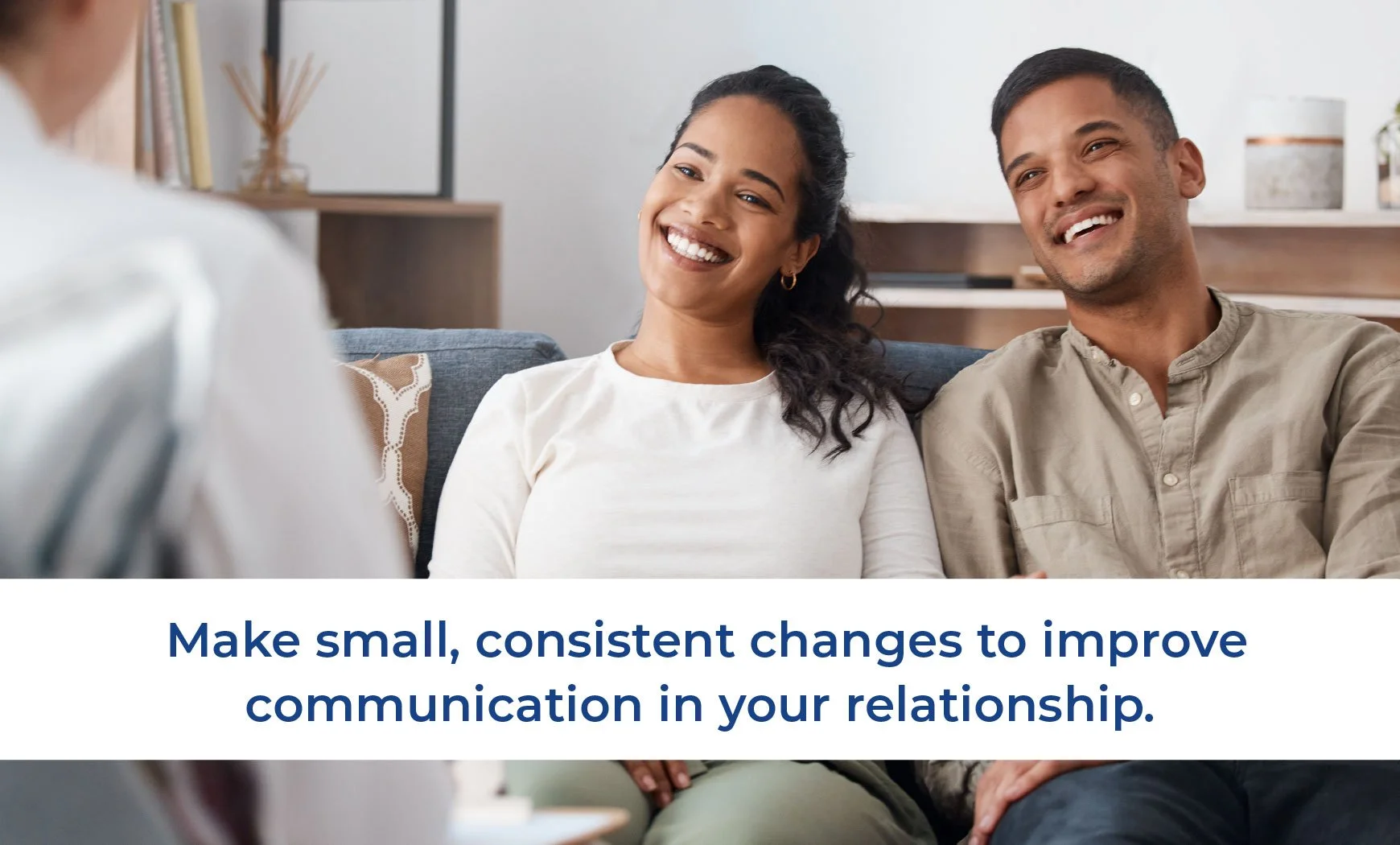
Improving communication in your relationship doesn’t require perfection—it’s about making small, consistent changes and effort. Here’s how you can realistically incorporate these tips into your everyday life according to our couples counselling Calgary AB therapists:
Start Small: Choose one or two tips to focus on each week. For example, start by practicing active listening and using “I” statements in your conversations. As you get more comfortable, gradually introduce other strategies. Try not to move on to adding new techniques until you feel you have built a good routine and comfort with the existing ones. Staying focused helps you build consistency and aptitude with one thing rather than getting overwhelmed or distracted with multiple.
Be Patient: Changing communication habits takes time. Don’t expect immediate results. Celebrate all of the wins, like successfully having a calm discussion or feeling more understood. This is important to do individually for yourself and also as a couple, remind our couples counselling Calgary AB therapists.
Set Boundaries: Make sure both of you are on the same page about when and how to discuss sensitive topics. Agreeing on when to take breaks during heated conversations or scheduling “relationship check-ins” can provide structure. Take time to do this when things are relatively calm and stable rather than during a moment of conflict or crisis.
Keep the Conversation Going: Remember that communication is an ongoing process. Even after you’ve resolved one issue, continue practicing the tools that work for both of you. Regularly revisit your communication strategies to ensure they stay effective. You may also consider couples counselling and/or individual relationship counselling as a way to promote accountability, create regular opportunities to check-in, and get third party feedback on patterns that might be worth shifting.
By putting these tips into practice, you’ll foster a deeper understanding and connection with your partner, making your relationship stronger, healthier, and more fulfilling.
Conclusion
Communication is not just about talking—it’s about listening, understanding, and responding in ways that make your partner feel valued. It is also about timing and openness, remind our couples counselling Calgary AB counsellors. By recognizing the challenges, practicing the tips, and being patient with yourself and your partner, you can significantly improve how you communicate. Relationships thrive when both partners are committed to open, honest, and compassionate communication, so start small and build from there. The effort you put into communicating better today will pay off with a stronger, more secure relationship tomorrow.
Sana Psychological is a mental health and addiction recovery clinic in Calgary, AB that supports individuals, couples, and families in improving their quality of life. You can Meet the Team, including our relationship specialists, using our Therapist Filter tool.